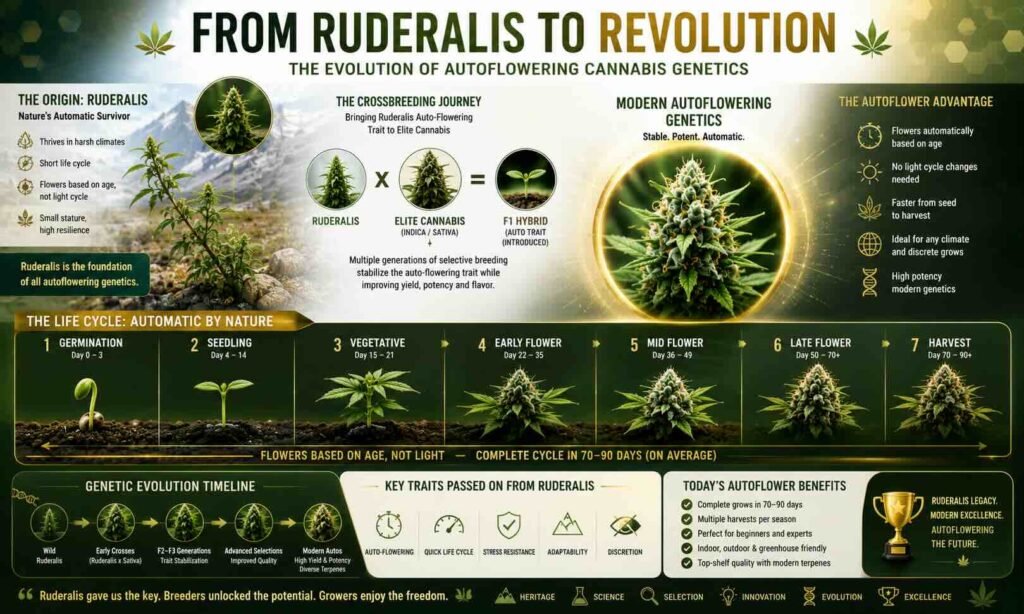
The introduction of autoflowering cannabis genetics represents one of the most significant developments in modern cultivation. Before autoflowering varieties became widely available, growers relied almost exclusively on photoperiod plants that required specific light cycles to trigger flowering. The incorporation of Cannabis ruderalis genetics changed this model entirely, creating cultivars capable of flowering automatically regardless of day length.
Today, autoflowering varieties are cultivated around the world and have become an important part of the cannabis industry. Their popularity stems from their simplicity, adaptability, and rapid life cycle. Understanding how ruderalis genetics contributed to this transformation helps explain why autoflowering cultivars continue gaining popularity among growers of all experience levels.
What Is Cannabis Ruderalis?
Cannabis ruderalis is often considered the third major cannabis subspecies alongside indica and sativa. Unlike traditional photoperiod cannabis plants, ruderalis evolved in regions where environmental conditions favored rapid reproduction rather than dependence on seasonal light changes.
These plants adapted to shorter growing seasons and developed the ability to flower automatically based on age rather than day length. While ruderalis plants were generally smaller and less commercially attractive than traditional cannabis varieties, they possessed a unique genetic trait that would later revolutionize breeding.
This automatic flowering characteristic became the foundation of modern autoflowering genetics.
Without ruderalis, autoflowering cultivars would not exist in their current form.
The Birth of Autoflowering Genetics
Breeders recognized the potential of ruderalis genetics and began incorporating them into breeding projects with traditional cannabis varieties. The objective was clear: combine the automatic flowering trait of ruderalis with the vigor, structure, and overall quality of established cultivars.
Early autoflowering projects focused on stabilizing these traits while improving consistency and overall plant performance. Through multiple generations of selective breeding, breeders gradually refined autoflowering genetics into the cultivars available today.
The result was a new category of cannabis capable of completing its life cycle without requiring changes to the light schedule. This represented a major breakthrough for cultivators.
Modern autoflowering genetics are far more advanced than the first generations developed decades ago.
Advantages of Autoflowering Cultivars
One of the primary reasons autoflowering varieties became popular is their simplicity. Because flowering occurs automatically, growers do not need to manage photoperiod schedules to initiate bloom. This makes cultivation more accessible and reduces certain management requirements.
Autoflowering cultivars are also known for their relatively fast life cycles. Many complete their development significantly faster than traditional photoperiod plants, allowing growers to plan cultivation cycles more efficiently.
Growers interested in exploring modern autoflowering genetics can learn more through acheter en ligne Ministry of Cannabis. The development of contemporary autoflower cultivars demonstrates how far breeding has progressed since the introduction of ruderalis genetics.
The convenience offered by autoflowering plants continues attracting new cultivators every year.
How Breeding Improved Autoflowers
The first autoflowering cultivars generated excitement, but breeders quickly recognized opportunities for improvement. Through careful selection and repeated breeding, modern autoflowering genetics became more stable, consistent, and adaptable.
Today’s autoflowers often display characteristics that would have been difficult to imagine during the earliest stages of development. Breeding programs have worked to enhance plant structure, vigor, environmental adaptability, and overall cultivation performance while preserving the automatic flowering trait.
This ongoing refinement has helped autoflowering cultivars become a respected category within the cannabis industry rather than a specialized niche.
Continued breeding innovation remains essential to future progress.
The Future of Autoflower Genetics
Autoflowering genetics continue evolving as breeders explore new combinations and improve existing cultivars. Advances in plant science and breeding techniques provide additional opportunities to refine performance and consistency.
Many growers now view autoflowering varieties as a practical option for a wide range of cultivation environments. As breeding programs continue improving genetic stability, autoflowers will likely play an increasingly important role in modern cultivation.
Additional information regarding cannabis growing techniques can be explored through https://softsecrets.com/fr/articles/grow.
The influence of ruderalis genetics continues shaping the future of cannabis breeding and cultivation.
Final Thoughts
The introduction of ruderalis genetics fundamentally changed cannabis cultivation by making autoflowering varieties possible. What began as a unique adaptation in a little-known cannabis subspecies eventually transformed breeding projects across the industry.
Today, autoflowering cultivars demonstrate how selective breeding can combine traits from different genetic backgrounds to create entirely new cultivation opportunities. Their continued development highlights the importance of innovation, genetic diversity, and long-term breeding efforts within modern cannabis cultivation.